1. Introduction
This guide describes how to set up a Windows guest in the acontis RTOSVisor. The Windows guest is running in a virtual machine, which is powered by QEMU/KVM. It is assumed that the steps listed in the Hypervisor Quick Start guide have been successfully executed.
2. Copy a Windows ISO installation media to the Hypervisor Host
In a first step, we need to copy the Windows installation media (ISO file) into the Hypervisor filesystem.
2.1. Using Filezilla (recommended)
With this setup, you can upload the Windows installation .iso-file via SFTP from a PC to the Hypervisor Host. First you need
to find out the IP address of the computer running Hypervisor.
Open a shell (right click on desktop and select ‘Open Terminal here’ or press CRTL + ALT + T) on the Hypervisor Host.
Determine the IP address of the Hypervisor Host (with
ifconfigcommand and throughinetentry):rte@RTV-TP104:~$ ifconfig enp2s0: flags=4163<UP,BROADCAST,RUNNING,MULTICAST> mtu 1500 inet 172.17.10.5 netmask 255.255.0.0 broadcast 172.17.255.255 inet6 fe80::ccbb:85f1:38d3:fa2a prefixlen 64 scopeid 0x20<link> ether 90:1b:0e:18:c9:83 txqueuelen 1000 (Ethernet) RX packets 4618420 bytes 4033770375 (4.0 GB) RX errors 0 dropped 8865 overruns 0 frame 0 TX packets 1460482 bytes 96608727 (96.6 MB) TX errors 0 dropped 0 overruns 0 carrier 0 collisions 0 lo: flags=73<UP,LOOPBACK,RUNNING> mtu 65536 inet 127.0.0.1 netmask 255.0.0.0 inet6 ::1 prefixlen 128 scopeid 0x10<host> loop txqueuelen 1000 (Local Loopback) RX packets 6864 bytes 427092 (427.0 KB) RX errors 0 dropped 0 overruns 0 frame 0 TX packets 6864 bytes 427092 (427.0 KB) TX errors 0 dropped 0 overruns 0 carrier 0 collisions 0 vnet0: flags=99<UP,BROADCAST,NOTRAILERS,RUNNING> mtu 1500 inet 192.168.157.1 netmask 255.255.255.0 broadcast 192.168.157.255 ether 00:60:c8:00:00:00 txqueuelen 1000 (Ethernet) RX packets 765775 bytes 74216258 (74.2 MB) RX errors 0 dropped 0 overruns 0 frame 0 TX packets 767935 bytes 74780268 (74.7 MB) TX errors 0 dropped 0 overruns 0 carrier 0 collisions 0
In this example the IP address is 172.17.10.5.
Hint
The device name enp2s0 differs on different PC/IPC’s!
Open Filezilla (get current version from https://filezilla-project.org/) on the computer where your
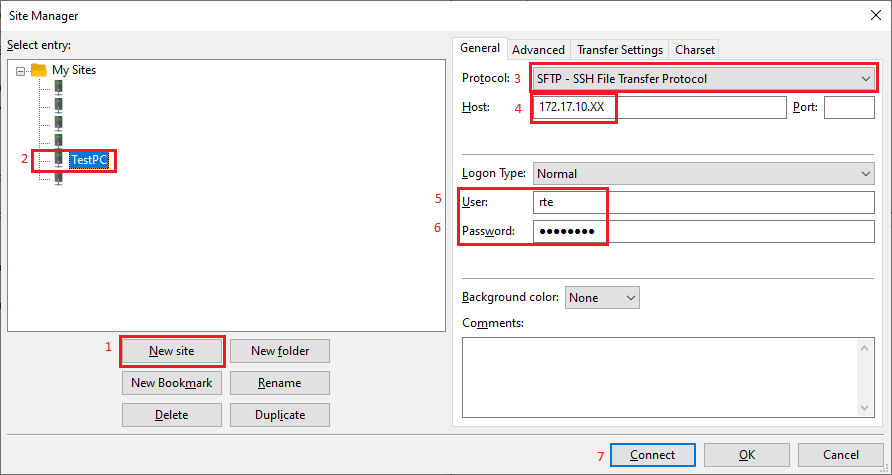
windows.isois located and create a new connection entry: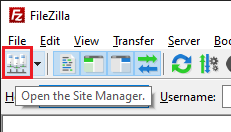
Push New_site button
Give a qualified name
Select SFTP - SSH File Transfer Protocol
Give host IP/name. In the screenshot above the last byte is
X-ed out. Replace it with the ‘detected’ IP address.Enter User name (same as at Hypervisor install)
Enter password (same as at Hypervisor install)
Push Connect button
Select the installation media file (the
.isoimage) in the Local tab on the left and upload it to/hv/isointo the Server tab on the right.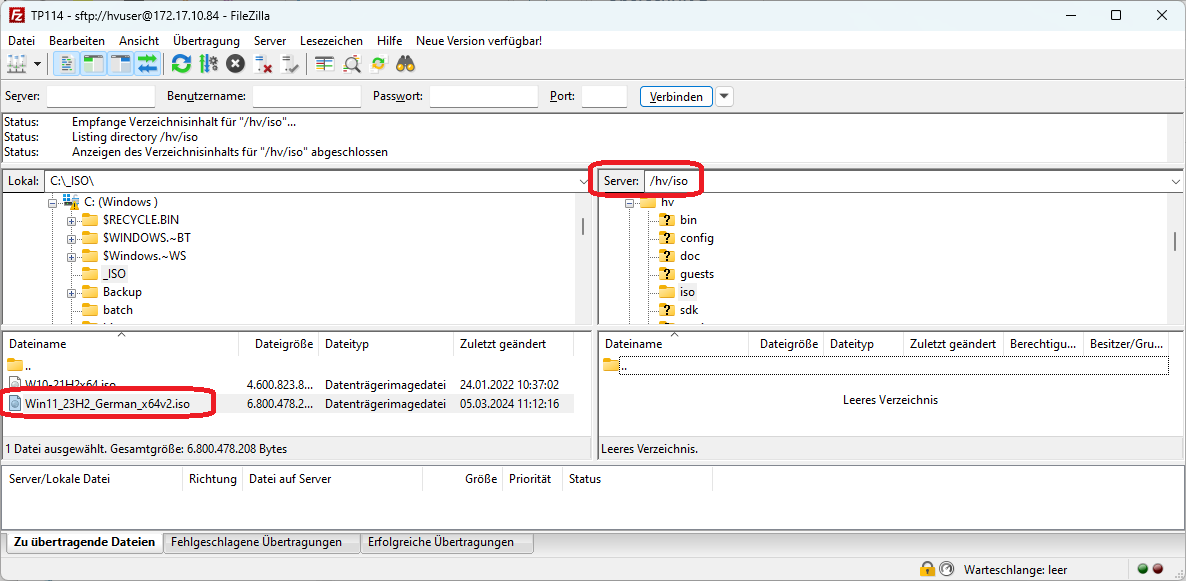
3. Guest Configuration
Hint
This guide focuses on the Windows example guest. Initially, the Hypervisor Host does not provide any example guest folders. To switch to the Windows guest example, you need to perform the suitable initialization.
3.1. Open Example Project in System Manager
3.1.1. Browser Start
The Firefox browser can be launched directly on the Hypervisor Host. Press the top left icon and select Web Browser.
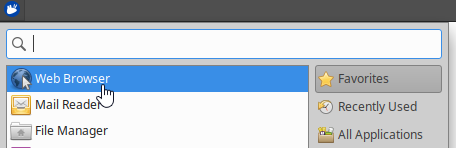
127.0.0.1 and connect to port 5000.http://127.0.0.1:5000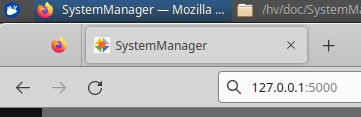
3.1.2. Local Connection
To connect the browser with the Hypervisor backend, please select Local Connection and the respective hypervisor type (RTOSVisor).
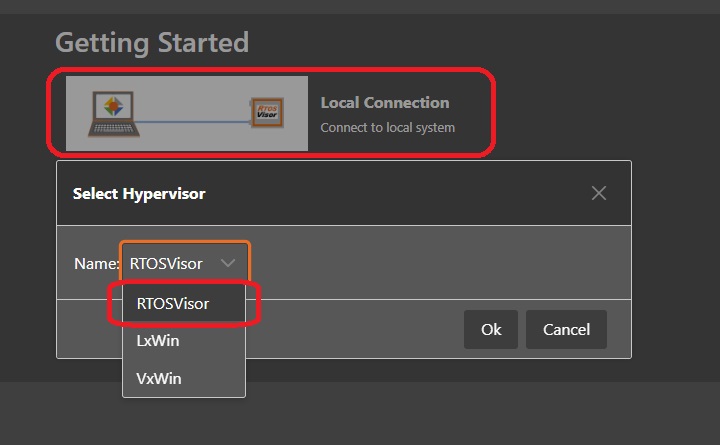
After acknowledging Connect to local system, the Hypervisor Host connection dialog will be shown.
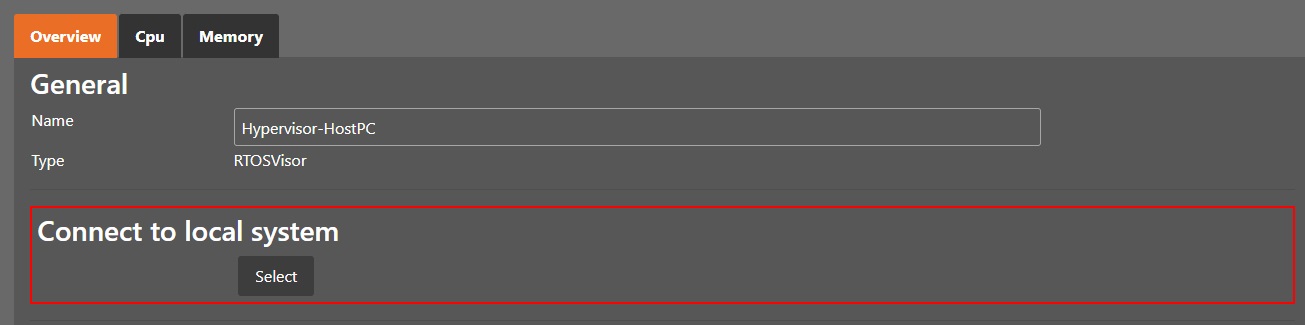
You should provide an appropriate name for this Hypervisor Host and press the Select button.
3.1.3. Initial Synchronization
When you have started the System Manager for the first time, you need to run an initial synchronization step.
Press the synchronization button.

A confirmation popup will then appear, where you need to press the ‘Apply’ button.
3.2. Windows Guest Example
Open the Windows Example project, it includes a Windows guest and a RT-Linux guest.
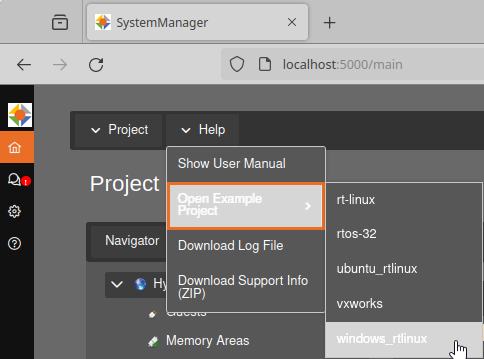
Before installing the guest operating system, it’s necessary to set up the corresponding virtual machine, including configuring settings like the number of CPU cores and network options.
In the Navigator, open Guests, then Windows Example. You will see this screen:
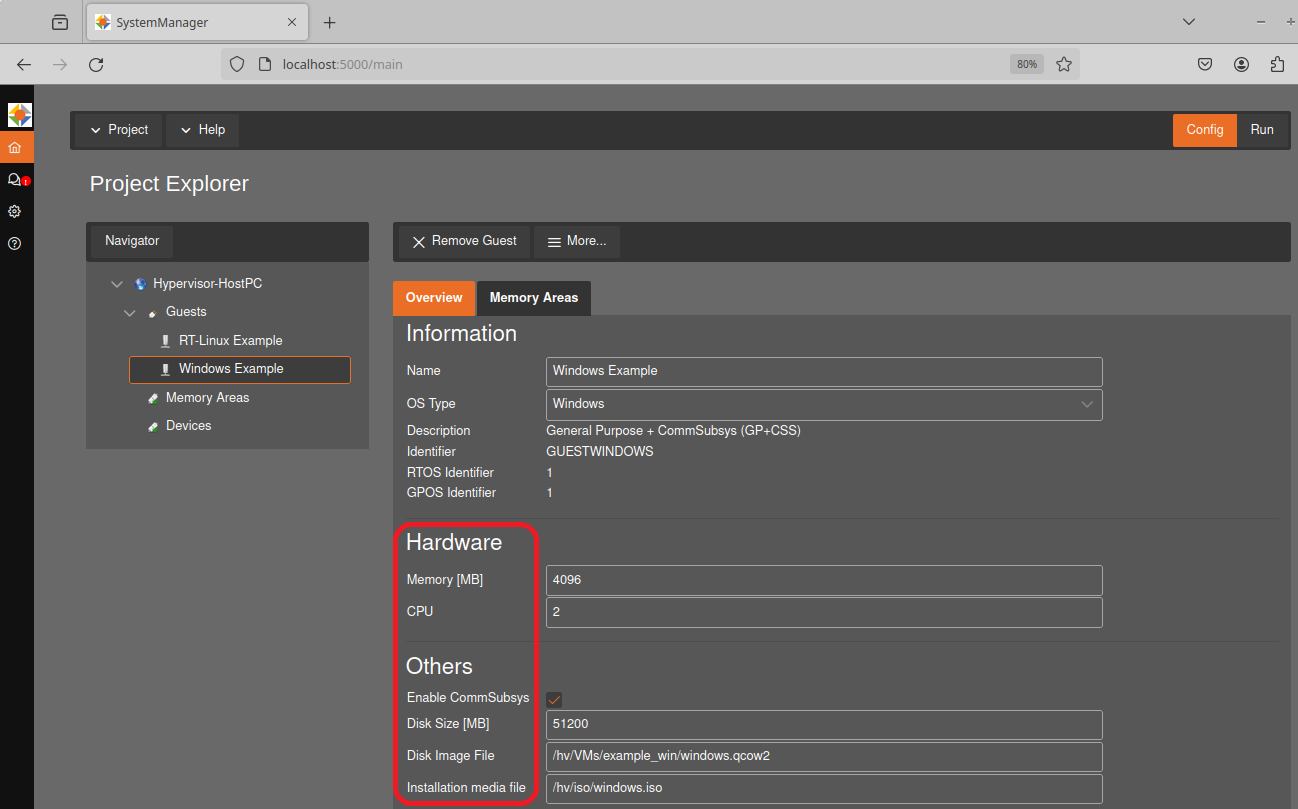
For the example Windows Guest setup, the installation media should be located at
/hv/iso/windows.iso. You have the option to rename your existing.isofile to match this location on the Hypervisor host, or you can modify theInstallation Media filesetting to point to your file.By defining the
Disk Image File, you can specify the location and name of the guest’s image files. This setting should include a path beginning with/hv/VMsand a filename ending with the.qcow2extension, such as/hv/VMs/example_win/windows.qcow2. This makes it possible to copy image files and use them in various projects without having to reinstall the Windows operating system.Ensure the number of CPU cores allocated does not exceed the number of physical cores available on the system that are not allocated to Real-time guests. For example, if on a quad core CPU, you need 2 cores for Real-time guests, the number of cores for the Windows guest must not exceed 2. The default parameters should fit for most cases.
Tailor the memory allocation to meet the requirements of the Windows guest, ensuring not to allocate more RAM than what is physically available on the Hypervisor Host.
Expand the disk size as needed (Windows 11 requires a minimum of 75GB).
After making changes to a project, it’s essential to perform the synchronization step again: in the Navigator select Hypervisor-HostPC, then press the Sync-button and click ‘Apply’ in the confirmation popup. This process commits the configurations to the Hypervisor Host.
Once synchronization is successful, the Hypervisor Host has to be rebooted.
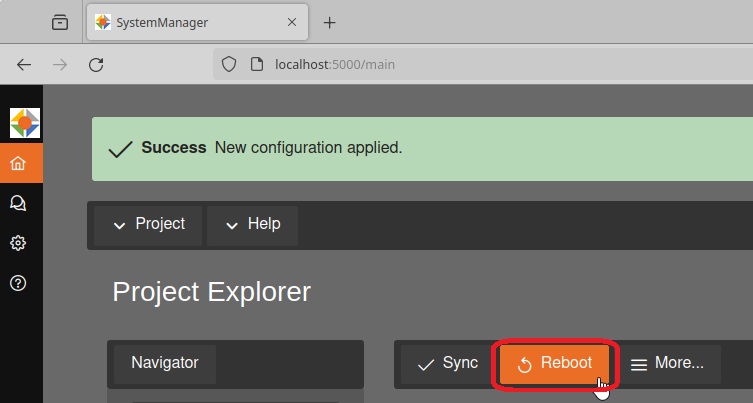
After rebooting the system, repeat the steps from the beginning:
Start the browser
Connect to 127.0.0.1:5000
Select
Local ConnectionSelect
Connect to local systemClick the
Syncbutton andApply
3.3. Command Line operation
This chapter demonstrates how to use the example projects using the command line instead of the System Manager. Note that it will override the settings made by the System Manager.
For the Windows Guest example setup, the installation media should be located at /hv/iso/windows.iso. Use the mv command to rename your existing .iso file if required.
mv /hv/iso/windows10.iso /hv/iso/windows.iso
hv_open_example windows_rtlinux
hv_sync_example windows_rtlinux
cd /hv/guests/guestwindows
If you are prompted whether you want to overwrite an existing project, type y if you are sure that you don’t need the existing project anymore.
Prior to installing the guest, we need to configure the respective virtual machine (e.g. number of CPU cores, network settings etc.).
The configuration files guest_config.sh and usr_guest_config.sh are located in the guest folder.
The meaning of each configuration setting is explained in detail in those files.
You need to edit these files and adjust them according to your needs and environment.
Caution
If the guest is controlled by the System Manager tool, you must not change the guest_config.sh file (the content may be overwritten by the System Manager), instead uncomment the respective settings in usr_guest_config.sh.
The number of CPU cores must not exceed the number of physical cores available in the system and not assigned to Real-time guests. For example, if on a quad core CPU, you need 2 cores for Real-time guests, the number of cores for the Windows guest must not exceed 2. The default parameters should fit for most cases.
mousepad /hv/guests/guestwindows/usr_guest_config.sh (and/or guest_config.sh)
# Adapt following lines to your system and needs (e.g. uncomment the respective lines):
vmname=...
vmid=...
windows_guest=...
cdrom_iso=...
num_cpus=...
ramsize=...
hdsize=...
shutdown_timeout=...
perfmon=...
Caution
Windows 11 requires a larger hdd size therefore the hdsize entry must be adjusted to a larger value, e.g. 75G!
export hdsize=75G # Hard disk size
You have to set the cdrom_iso parameter to the appropriate folder where the installation media ISO file had been copied before.
By default, the network connection is set up automatically (using DHCP). Please check the Hypervisor Manual for other settings.
Caution
Automatic network setting will only work, if the Ethernet cable is connected!
Caution
Please do not configure more CPUs than physically available (CPUs used for the Real-time OS are not available for the Windows guest).
Example: The maximum number of of CPUs on a quad-core CPU where 1 CPU is used for the Real-time OS is 3.
Caution
Please do not configure more RAM than available. The VM may unexpectedly crash if too much RAM is configured. You can determine the available RAM as follows:
cat /proc/meminfo | grep MemAvailable
4. Guest Installation
After VM configuration you need to start the guest for the first time. The following steps outline how to start the Windows guest installation in the System Manager.
Change to Run mode.

Start the Virtual Machine Framework (VMF). Starting the VMF will load the configuration for all guests. Real-time guests can only be launched when the VMF is running.
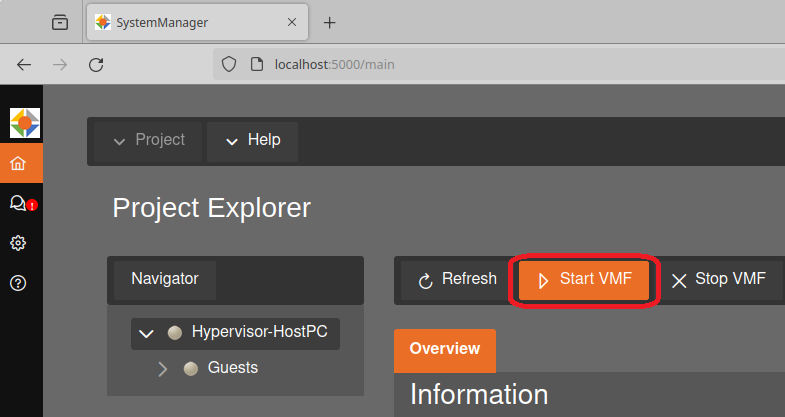
Windows Example guest in the Navigator on the left side.Start Guest Button.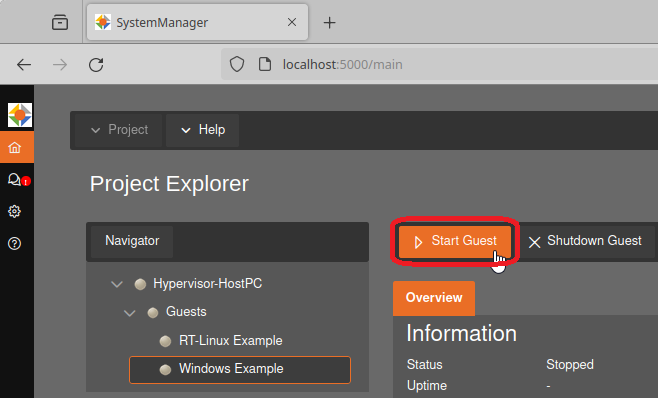
More.../Start Guest Viewer to open the guest viewer, where you can see the Windows guest’s output or desktop.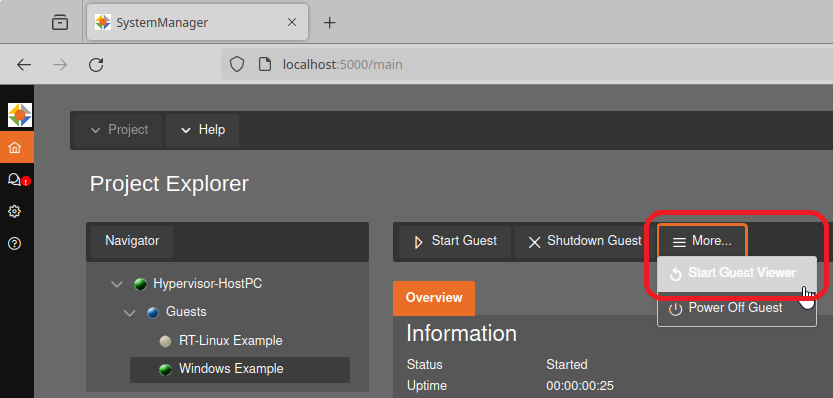
Optional: The Windows guest operating system can be launched using the command line interface, too.
cd /hv/guests/guestwindows
hv_guest_start -view
Caution
if you see an error like (remote-viewer:5083): Gtk-WARNING : 11:15:50.298: cannot open display: :10.0, you may be using a RDP connection when installing the guest.
In this case the GUI Window (remote-viewer) will not be shown. To fix this execute the commands
sudo -u username xhost +SI:localuser:root
where the username is the username you are logged in with.
After that execute hv_guest_console to start the viewer.
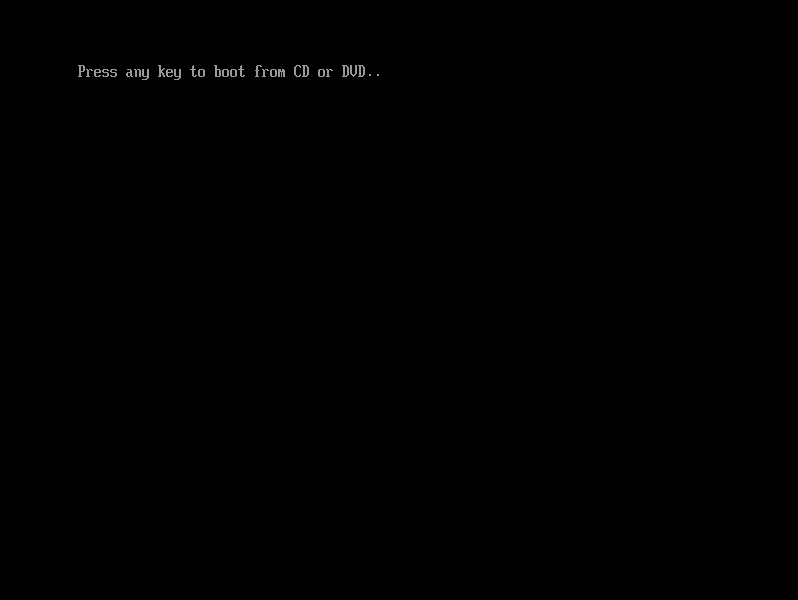
The installation media iso file will be detected by the virtual bios, you need to press a key to boot from it:
Hint
In case no key was pressed in time or the installation media was not found, the EFI shell will be started.
Option a) You can enter the BIOS by entering
exit. Once you leave BIOS the boot begins again and you can press a key to boot from CD.- Option b) You can manually start the CD’s bootloader by entering
$ FS0:$ \EFI\BOOT\BOOTX64.EFI
Hint
If the start EFI file is not set in the BIOS (BOOTX64.EFI does not exist), you need to type exit to leave the shell and switch into the BIOS.
There you need to select the CDROM in the boot menu.
5. Windows Installation
Caution
A Windows 11 installation requires some additional steps. Please check the next chapter!
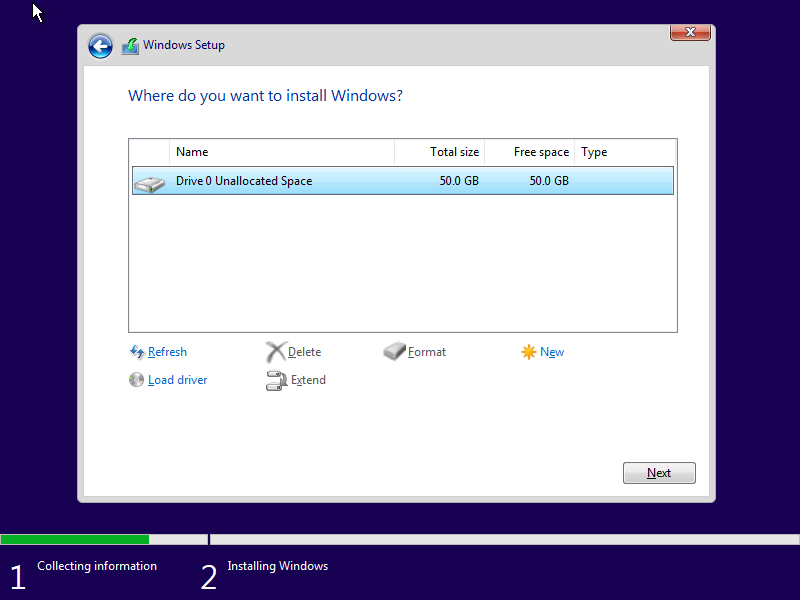
Follow the steps as usual until the Where do you want to install Windows dialog shows up
Hint
If you are prompted for the installation type, select Custom
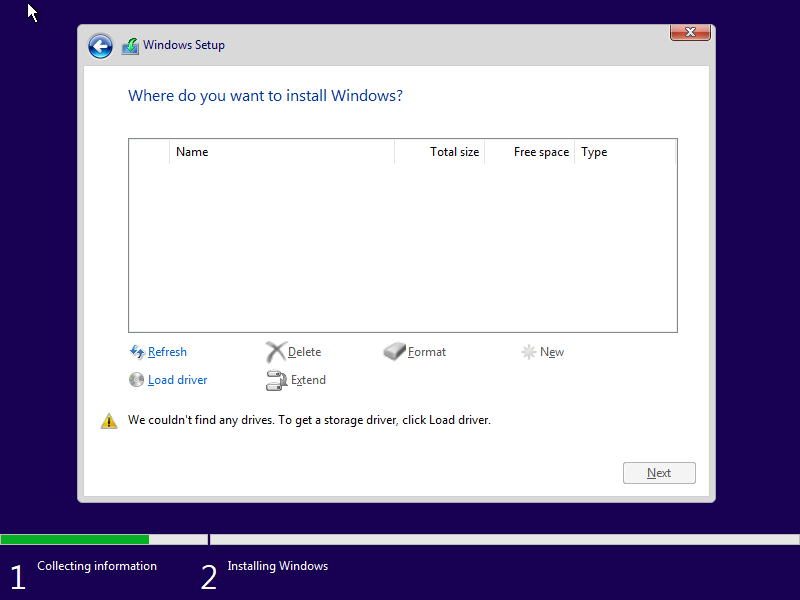
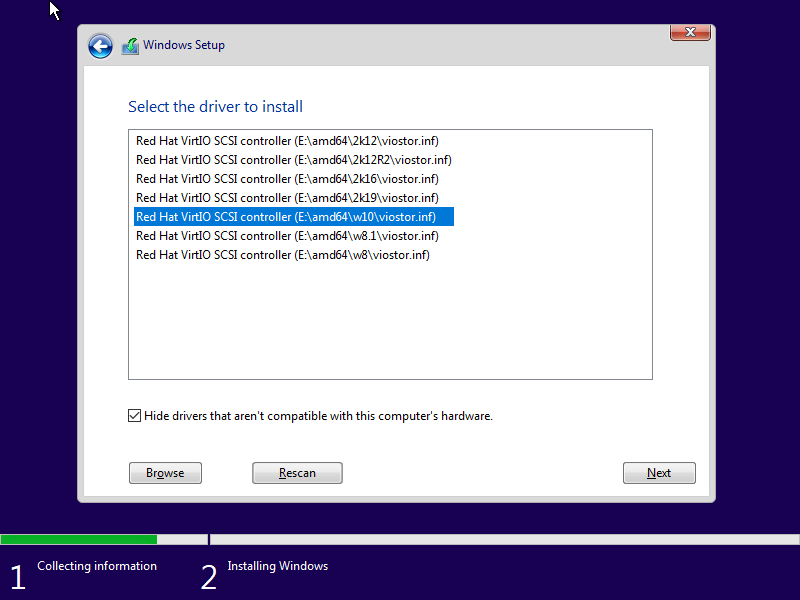
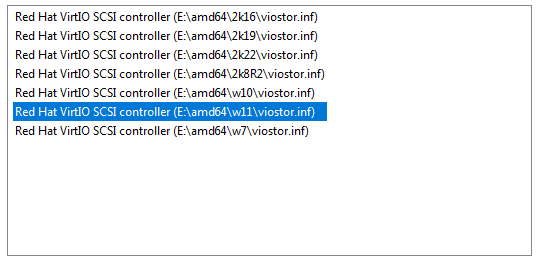
Click on Load Driver and browse to the CD Drive with the virtio drivers. Select the appropriate driver in the respective folder (e.g. Windows 10: \viostor\w10\amd64 Windows 11: \viostor\w11\amd64).
6. Windows 11 Installation
Installing Windows 11 need some additional handling regarding prerequisites.
The Windows 11 installer checks for TPM and Secure Boot.
Disable TPM and Secure Boot checks in the installer:
When the installer begins, press Shift + F10 and launch
Regeditfrom thecommand prompt.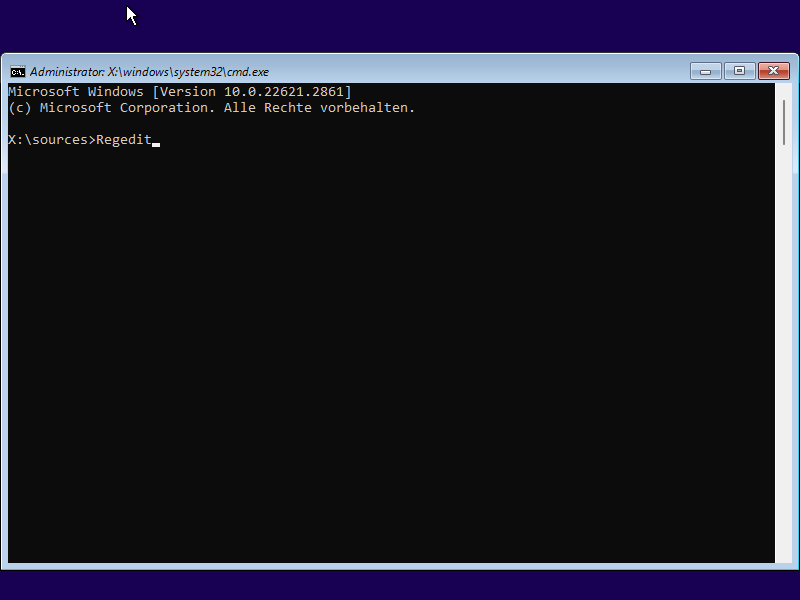
Create a new key named
LabConfigunderHKLM\SYSTEM\Setup.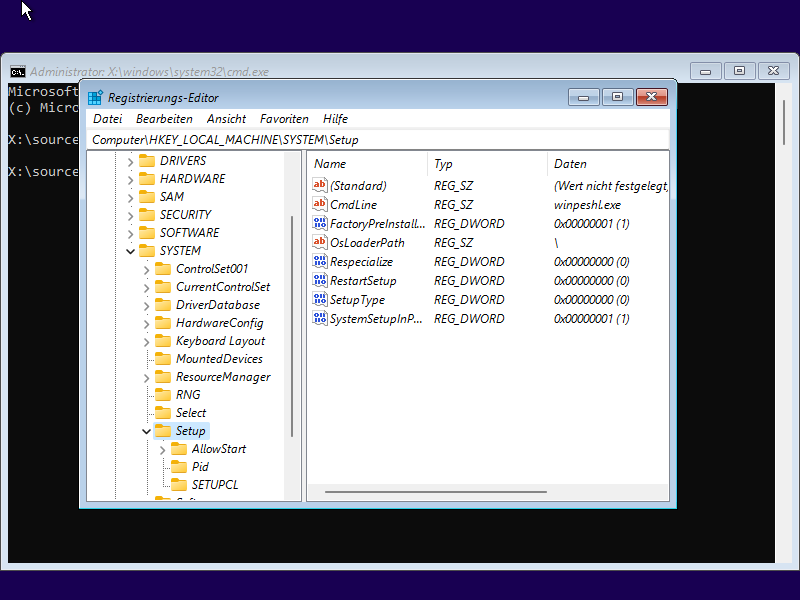
Add a new
DWORDvalue toHKLM\SYSTEM\Setup\LabConfignamedBypassTPMCheckand set it to 1.Add a new
DWORDvalue toHKLM\SYSTEM\Setup\LabConfignamedBypassSecureBootCheckand set it to 1.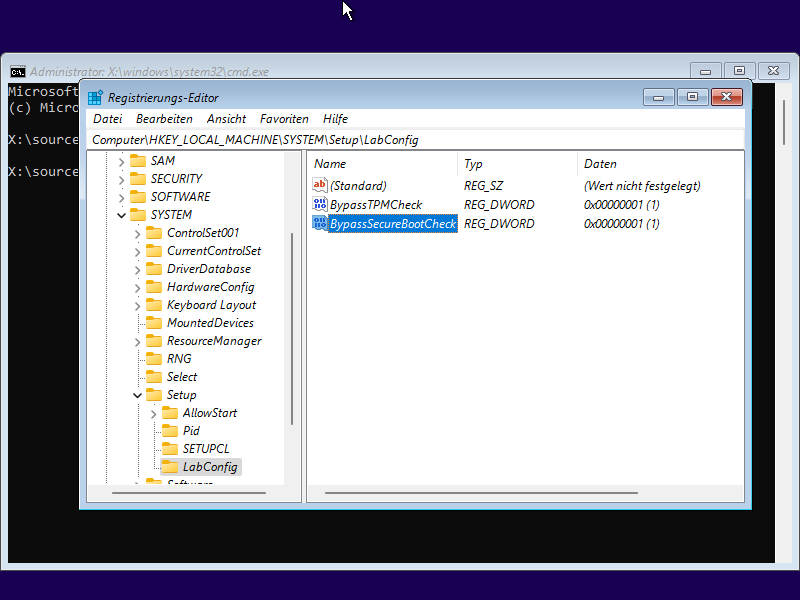
Fig. 6.3 The figure shows the finally
LabConfigregistry key andBypassTPMCheck+BypassSecureBootCheckvalues.Exit
Regedit.To disable the network check, enter
OOBE\BYPASSNROinto thecommand prompt.Close the
command prompt, and continue.
The other steps are the same as for Windows 10, but with drivers for Windows 11 where applicable.
7. Hypervisor Guest Tools
After successfully installing Windows you need to install the SPICE Windows guest tools.
Open the Windows Explorer and install the spice guest tools.
The installation file is located in CD Drive (E:) virtio-win-0.1.266: virtio-win-guest-tools. Select and start to install these tools. In case a message box appears to confirm driver installation, please confirm install the driver(s).

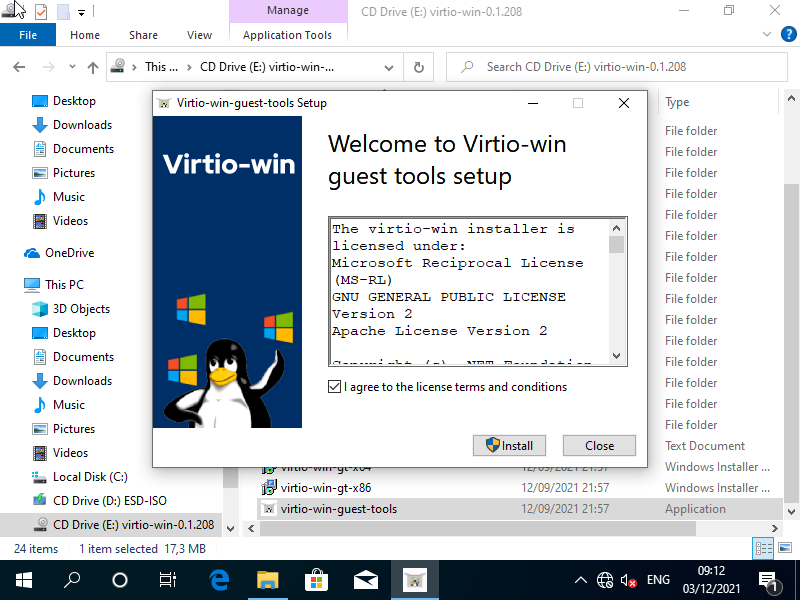
After the setup finished, you may not be able to use the mouse anymore. This is related to a new driver installed which is not supported by the viewer application. In any case, close the setup message box (type enter, while the focus is on the finish box).
- Shutdown WindowsYou need to shut down the guest (do NOT reboot Windows!).If this is not possible inside the guest, please run
hv_guest_stopin the guest folder (/hv/guests/guestwindows).If shutdown does not work, you need to close the setup windows before (e.g. using tab keys to select the finish button).You may power off the guest by runninghv_guest_stop -killin the guest folder (/hv/guests/guestwindows).
8. Final Windows startup
8.1. System Manager operation case
Clear the “Installation media file” entry field to remove the .iso file, preventing the system from booting from the installation media again. You need to switch into Config mode first, then select the Windows Example guest and finally clear this entry.
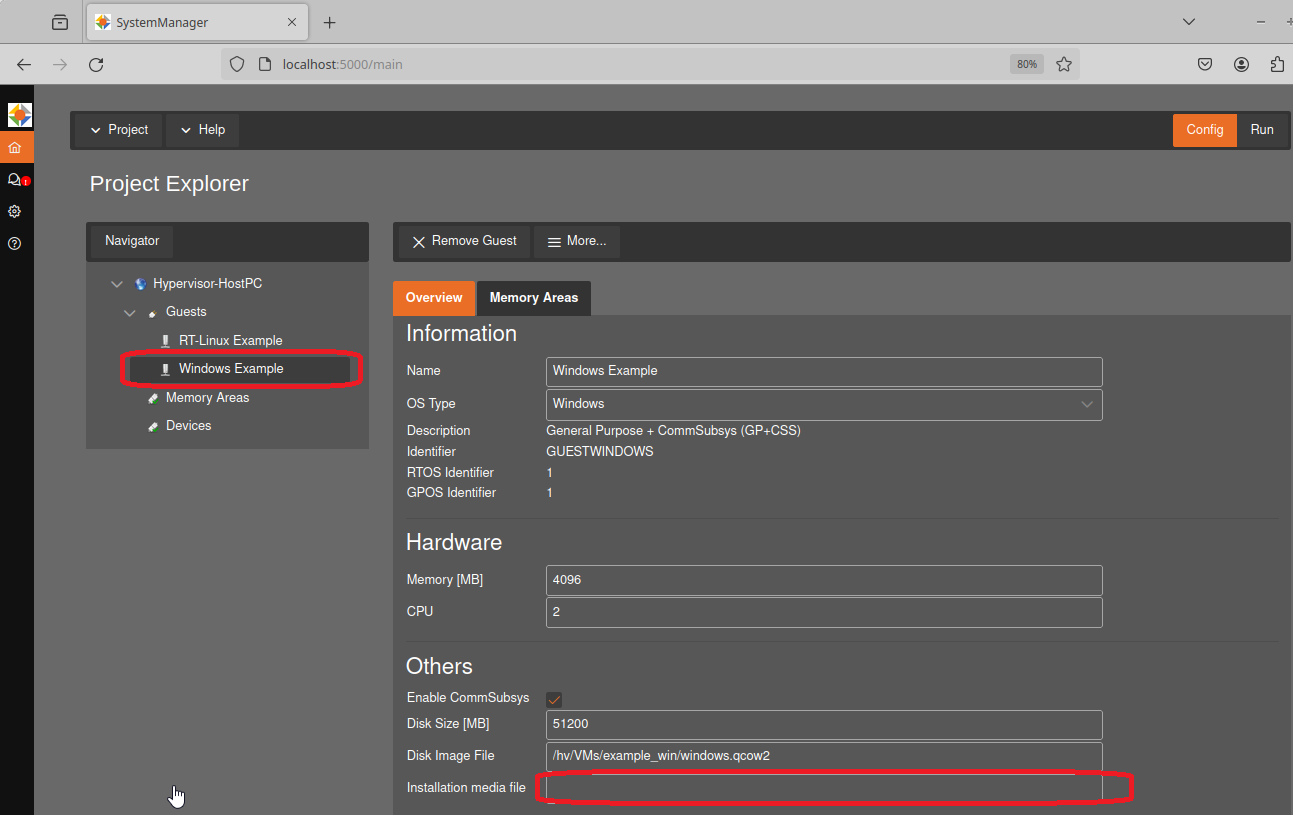
Then you need to synchronize the updated settings with the Hypervisor backend. Switch to the Hypervisor HostPC entry in the Navigator tab and press the
Syncbutton again.
A confirmation popup will then appear, where you need to press the ‘Apply’ button.
Change to
Runmode.
Select the
Windows Exampleguest in theNavigatoron the left side.Click the
Start GuestButton.
Hint
If the message Starting guest failed, because VMF restart is required appears, navigate to “Hypervisor-HostPC” in the Navigator, then click “Stop VMF” followed by clicking “Start VMF”.
8.2. Command Line operation case
If you had set up the example project via the command line, then you will have to manually adjust the configuration again. You need to remove installation media file setting in the configuration and reboot the Windows example guest using the command line instead of the System Manager.
Adjust the file
usr_guest_config.sh(to avoid booting the installation media again)mousepad /hv/guests/guestwindows/usr_guest_config.shcomment "cdrom_iso" with #
Start the Windows guest
hv_guest_start -view
8.3. Windows specific notes
Due to hardware changes, Windows may automatically reboot once. Mouse and desktop may still not work properly. In this case, please install the latest Windows updates.
Caution
- In some cases the guest network does not work after guest tools installation. In case a guest reboot does not help you may try to execute the following steps:
Open the
Windows Device ManagerOpen
Network Adaptersand check ifRed Hat VirtIO Ethernet Adapterhas an exclamation mark near its icon.Delete all adapters with the exclamation mark (drivers deletion checkbox should not be checked out!).
Let Windows search for hardware changes –> the drivers should be found and installed properly.
9. RTOS Communication Support
To communicate with an RTOS via the Hypervisor we need to install RTOSVisor.exe containing the required drivers and packages.
Hint
If you encounter a message like Applying execute package: RteRuntime_x64. Error 0x80070643: Failed to install MSI package when running this command, you may have got a test version of the RTOSVisor.
In test versions unsigned drivers are included. You need to enable testsigning before installing the guest support.
Step 1: Run
Command Promptas administrator.Step 2: Input the command in the window:
bcdedit /set testsigning onand press Enter. Reboot the guest.
Caution
0x80004005) when accessing the share due to some restrictive Windows settings. In that case, try to allow insecure guest logins. Windows blocks guest logins to network devices using SMB2 by default.KVM Guests for more information and how to solve these issues.Open CMD prompt in Windows guest and enter the following:
Call \\10.0.2.4\qemu\files\RTOSVisor.exe
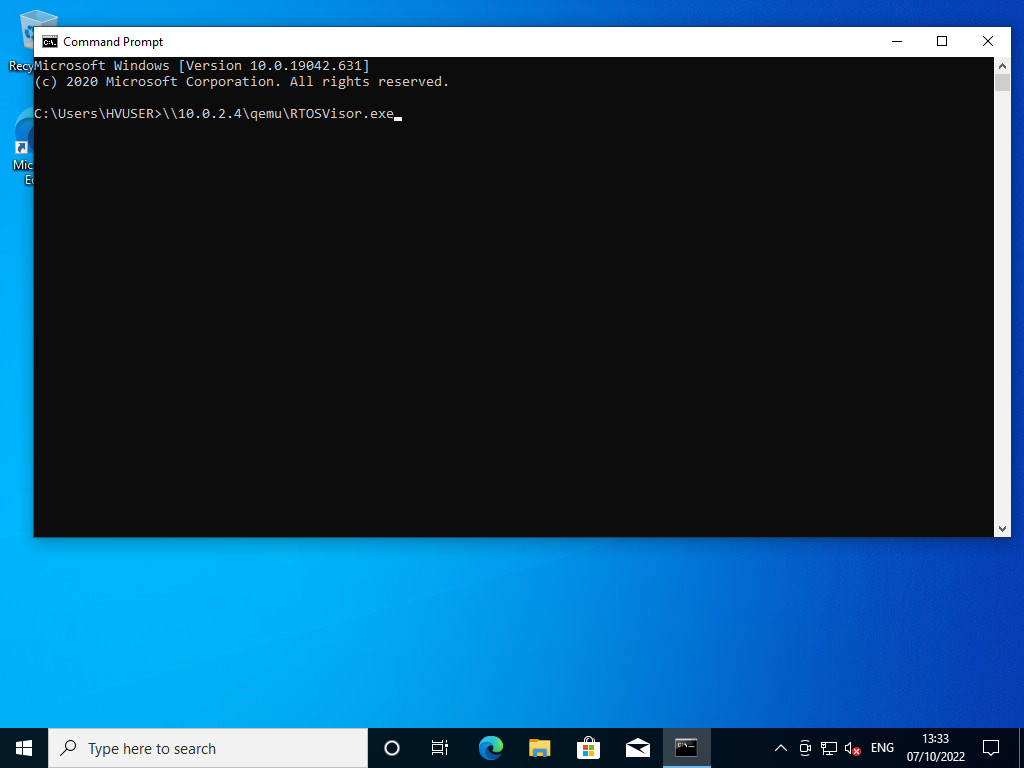
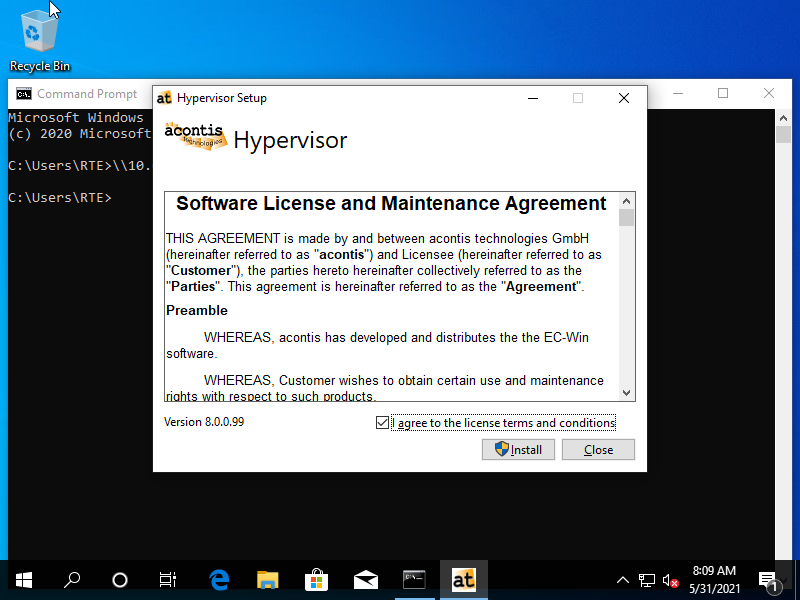
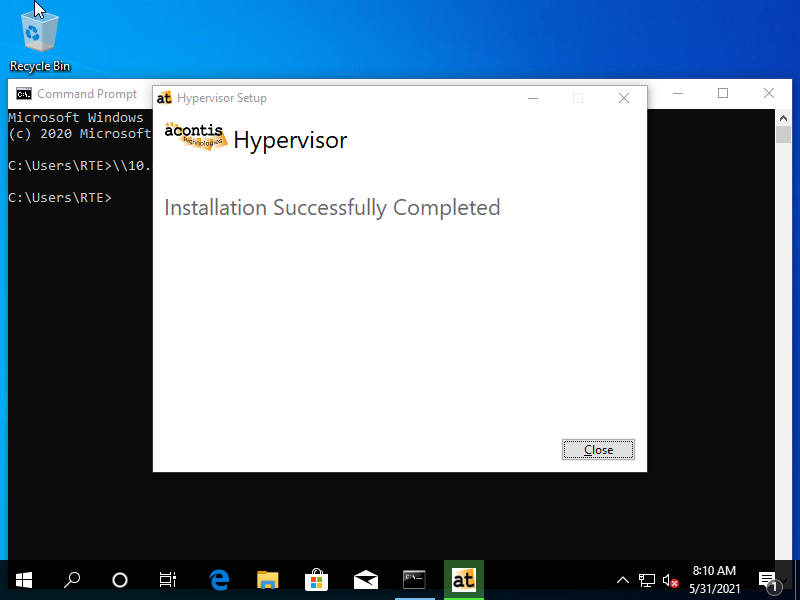
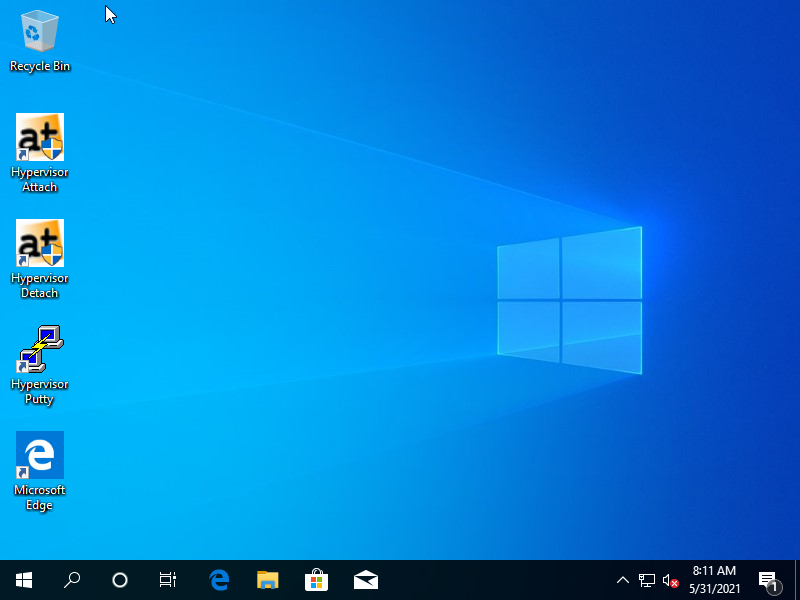
Caution
The installer will set-up the default values of Vnet IP address, Vnet MAC ID and attach ID! Therefore a 2nd (or more) Windows guest(s) will require manual adjustments to the aforementioned settings. Please adjust it accordingly!
10. Power & sleep
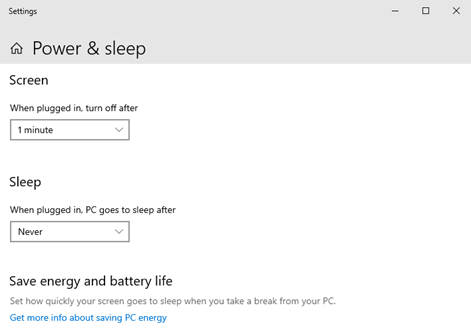
Sleep and Hibernate are currently not supported (S3 or S4 mode). Disable Sleep (Windows Settings – System – Power and sleep):
11. Windows and Real-time guest in parallel
In this step, we will run Windows and Real-Time Linux in parallel.
Shutdown Windows, do NOT reboot!
Reboot the Hypervisor Host
Open the browser, connect with the Hypervisor backend click the
Syncbutton andApplyagain.
Change to Run mode.
Start the Virtual Machine Framework (VMF).
Run the
Real-Time Linuxguest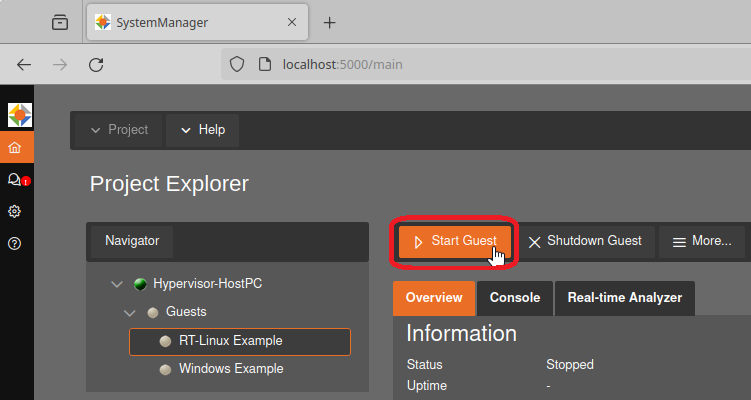
Start the
Windowsguest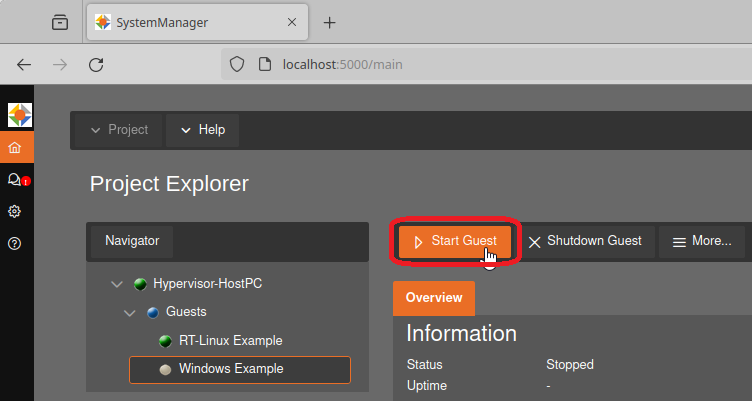
After logging in into Windows, execute
Hypervisor Attach(Desktop icon)
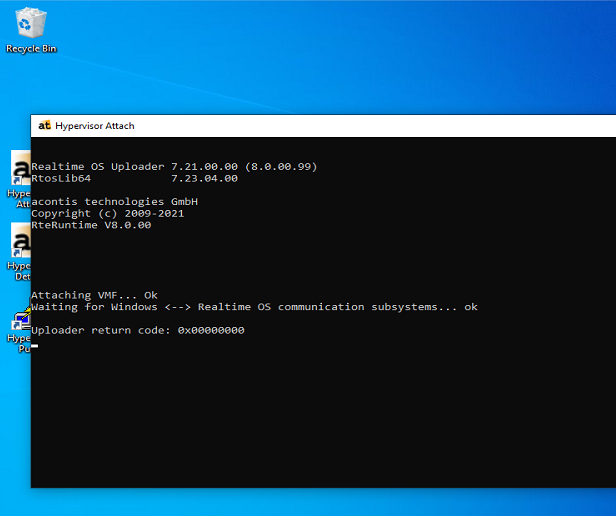
Download and install the appropriate
puttypackage from https://www.putty.org/Open the RT-Linux shell: execute
Hypervisor Putty(Desktop icon)
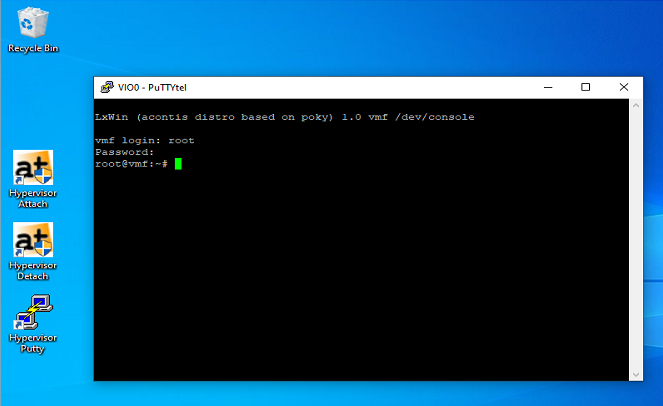
Log in into Real-Time Linux and run the Real-time demo:
vmf64 login: root
password:  root
RealtimeDemo